
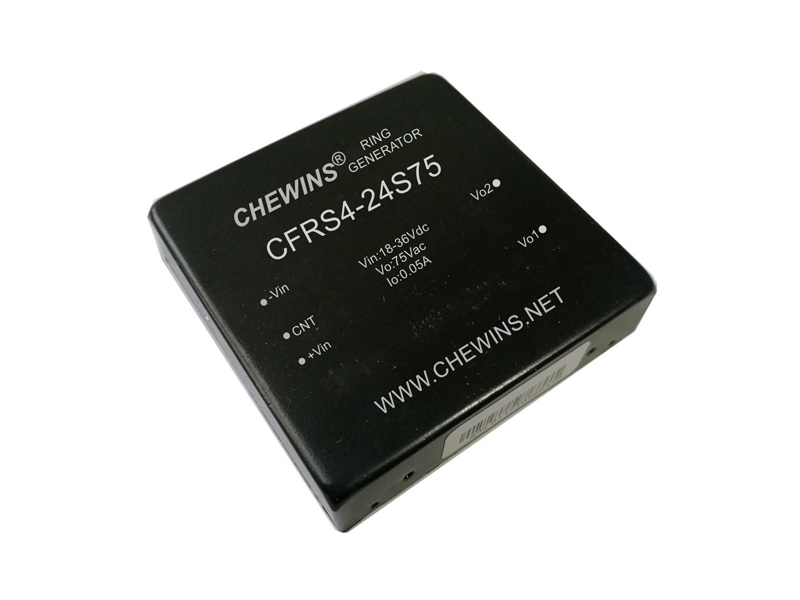
DCDC CFRS4 series power module professional guide: meeting industrial-grade high reliability requirements
summary: CFRS4 series DC-DC power modules are specially designed for harsh environments such as industrial automation, communication equipment and rail transit, and have outstanding features such as high reliability, high efficiency and high power density. This article provides comprehensive technical analysis and application guidance to help engineers take full advantage of its performance.
1. Core features of CFRS4 series power modules
The CFRS4 series uses advanced topology and packaging technology to achieve excellent performance in multiple key performance indicators:
Wide input voltage range: Supports multiple input specifications of 9-36V, 18-75V, 36-160V, adapting to the complex power grid environment of industrial sites
High conversion efficiency: Using synchronous rectification technology, the peak efficiency reaches 94%, effectively reducing system heat loss
Reinforced isolation design: 3000VAC isolation voltage between input and output, providing reliable electrical isolation protection
wide operating temperature: -40℃ to +105℃ extended operating temperature range to meet the needs of outdoor equipment
Complete certification qualifications: Passed UL/IEC/EN 62368-1 certification, some models comply with EN 50155 railway standards
2. Frequently Asked Questions about CFRS4 Series Power Modules
Q1: How does the CFRS4 module cope with voltage transients and surges in industrial sites?
A: CFRS4 has multiple protection designs:
Built-in protection: The module integrates input overvoltage protection and can withstand 160% of the rated voltage for 100ms.
external advice: It is RECOMmended to add TVS tubes and π-type filters at the front end to enhance surge protection.
layout requirements: The input capacitor should be as close as possible to the module pin to provide a low impedance decoupling path.
Q2: How to ensure the long-term reliability of the module in high temperature environment?
A: High temperature reliability guarantee measures:
Power derating: When the ambient temperature is >60°C, use a linear derating of 3.0%/°C.
Thermal design: Substrate-type packaging needs to ensure good contact with the heat sink. It is recommended to use thermal conductive silicone grease.
air circulation: Reserve at least 5mm space around the module to ensure natural air convection.
Q3: How to use the remote voltage sampling function of CFRS4 correctly?
A: Key points of remote sampling configuration:
Sampling point selection: Directly connected to the highest accuracy demand point at the load end
Wiring specifications: Use twisted pair cables and stay away from noise sources and power lines
Compensation design: Adjust compensation parameters according to line impedance characteristics
Q4: What issues should be paid attention to when using multiple modules in parallel?
A: Key points for parallel use:
Current sharing design: It is recommended to use external discrete components to achieve active current sharing
heat distribution: Maintain appropriate spacing between modules to avoid thermal coupling
Startup timing: Ensure that the enable signals of each module are synchronized to avoid startup conflicts.
3. CFRS4 Series Power Module Troubleshooting Guide
Solutions to key points in troubleshooting diagnosis
Startup failed1. Input power quality
2. Enable signal configuration
3. Undervoltage protection setting
4. Peripheral circuit status 1. Check input voltage range
2. Verify the EN pin level
3. Adjust UVLO threshold
4. Confirm configuration circuit
Output exception1. Load characteristics
2. Effect of temperature
3. Feedback loop
4. Compensation network 1. Analyze load transients
2. Monitor operating temperature
3. Check feedback parameters
4. Optimize compensation design
Reduced efficiency1. Working point deviation
2. Magnetic components
3. Switching characteristics
4. Drive circuit 1. Optimize operating point
2. Check the core material
3. Analyze switching waveforms
4. Verify driver parameters
Overheating protection1. Heat dissipation conditions
2. Ambient temperature
3. Load power
4. Ventilation 1. Improve heat dissipation
2. Control the ambient temperature
3. Reduce load
4. Enhance ventilation
4. Best practices for CFRS4 series application design
Circuit design specifications
Input filtering: It is recommended to use a 22μF ceramic capacitor in parallel with a 100nF high frequency capacitor.
Output configuration: Use low ESR polymer capacitors, and the capacitance value is selected according to the load dynamic characteristics.
protection circuit: The input end is equipped with a TVS tube of appropriate grade and an anti-reverse connection circuit.
Monitoring function: System-level monitoring using power good signals
PCB layout guidelines
power path: Use short and wide copper foil to minimize parasitics
grounding strategy: Adopt star grounding, power ground and signal ground are separated
Thermal management: Make full use of internal heat dissipation pads and add thermal vias
Noise control: Keep sensitive signals away from switch nodes and magnetic components
Reliability safeguards
Derating design: Voltage is derated by 80%, current is derated by 70%, power is derated by 60%
protection mechanism: Make sure all protection features are properly enabled and configured correctly
Test verification: Conduct reliability tests such as temperature cycling, vibration, and high-temperature aging.
5. Typical application scenario configuration
Industrial automation control system
Requirements: high reliability, strong anti-interference ability
Configuration: Choose the 3000VAC isolation version to strengthen EMC design
Rail transit equipment
Requirements: Comply with EN 50155 standard, wide temperature range
Configuration: Choose the -40℃ to +105℃ version to enhance mechanical fixation
communication infrastructure
Requirements: high efficiency, long life
Configuration: Optimized heat dissipation design to ensure continuous operation 7×24 hours
Outdoor monitoring equipment
Requirements: Moisture-proof, anti-corrosion, wide temperature adaptability
Configuration: Add three-proof coating and improve protection design
in conclusion
CFRS4 series DC-DC power modules provide ideal power solutions for various harsh environment applications with their excellent industrial-grade characteristics and reliability. By following correct design specifications, implementing effective thermal management and comprehensive protection measures, you can ensure stable and reliable operation of the system throughout its life cycle.

Address: No. 25, Huoju South Street, Development Zone, Zhuozhou City, Hebei Province
Tel: 15600309099 (Mr. Lu)
Email: sales@chewins.net
Copyright © Beijing Huayang Changfeng Technology Co., Ltd.
This website uses cookies to ensure you get the best experience on our website.

 中文
中文 Español
 Pусский
 Français



 WhatsApp
 Phone
Phone